Learn About Map Factory: Map Factory began with a simple idea: digital worlds are built by people who are willing to experiment, create and push technology further.
Long before today’s sophisticated game engines, real-time 3D environments and immersive technologies became mainstream, PC gaming communities were already demonstrating what could happen when developers and players were given the tools to create their own experiences. Custom maps, modifications, level designs and user-created environments allowed games to become more than the products originally shipped by their developers.
Map Factory was part of that culture.
The original Map Factory emerged during an era when independent gaming websites played an important role in connecting creators with players. Custom maps and levels were shared across communities, giving talented designers an opportunity to build environments that could be discovered, played and discussed by audiences around the world.
That history remains an important part of who we are.
Today, Map Factory has evolved into a modern publication focused on the technology, creativity and development practices behind digital worlds. Our coverage has expanded from individual game maps to the broader ecosystem surrounding game development, game engines, level design, 3D graphics, virtual environments and interactive technology.
The technology may have changed dramatically, but the underlying idea has not.
Digital worlds are created by people who want to build something that did not exist before.
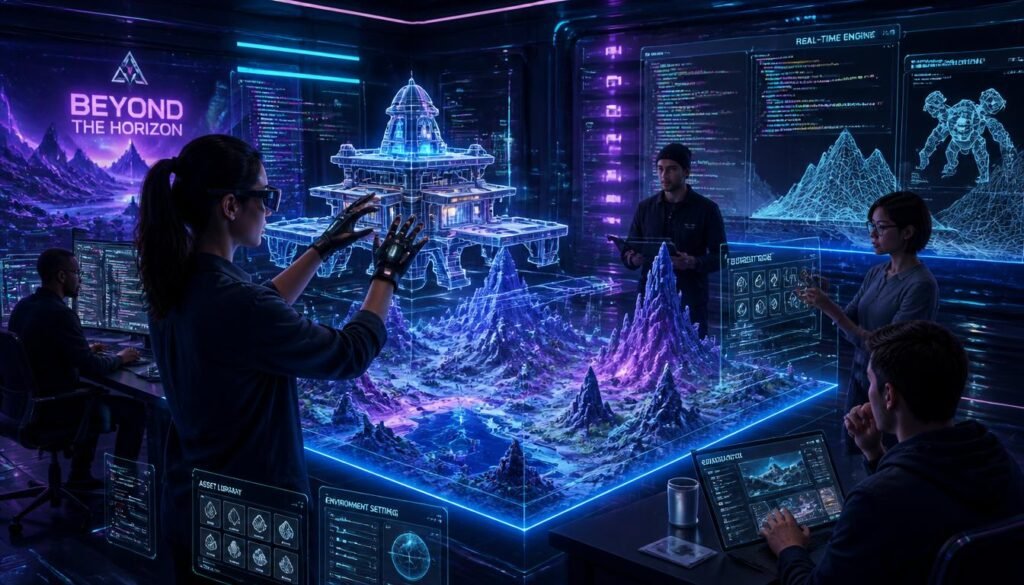
Optimizing game performance across cross-platform titles requires a granular understanding of asset bundling, draw calls, and scene hierarchy management as detailed in the official Unity User Manual. Linking directly to these guidelines grounds your performance guides in verified engine best practices
From Game Maps to Digital Worlds
The original concept behind Map Factory was closely connected to the PC gaming and modding communities.
At the time, custom maps represented an important form of creativity within gaming. Players could move beyond the environments provided by a game’s developers and explore new maps created by members of the community. Level designers could experiment with layouts, gameplay mechanics, visual environments and technical possibilities.
Games such as Unreal Tournament, Quake, Half-Life, Doom, Far Cry and other influential PC titles helped establish an environment in which technically capable and creatively ambitious users could become creators themselves.
The tools were often demanding.
Creating a level required an understanding of game engines, geometry, lighting, textures, gameplay and technical constraints. Designers had to understand not only what they wanted to build but also what the underlying technology could support.
That relationship between creativity and technology is still at the heart of Map Factory.
Modern developers have vastly more capable tools, but the fundamental challenge remains remarkably familiar. Developers still need to construct environments, design interactions, manage technical limitations and create experiences that feel coherent and engaging.
The difference is the scale.
Today’s digital environments can contain enormous worlds, sophisticated physics, advanced artificial intelligence, dynamic lighting, procedural systems and highly detailed 3D assets. Technologies that were once experimental are now becoming fundamental components of professional development workflows.
Map Factory follows that evolution.
A New Chapter for Map Factory
The internet has changed considerably since Map Factory’s original era.
Centralized distribution platforms, digital storefronts, development communities and sophisticated collaboration tools have transformed how games and user-created content are produced and distributed.
At the same time, the technologies behind interactive experiences have expanded far beyond conventional gaming.
Game engines are now capable of powering sophisticated real-time visualization. 3D technologies are being used to construct interactive environments. Virtual and augmented reality are creating new approaches to digital interaction. Artificial intelligence is beginning to influence development workflows, content generation and testing.
The concept of a “game map” has therefore evolved.
A digital environment can now be a game level, a virtual world, a simulation, a training environment, a visualization or an immersive experience.
This evolution created an opportunity for Map Factory to enter a new chapter.
Rather than abandoning its history, we are building upon it.
The modern Map Factory explores the technologies and disciplines that sit behind today’s digital environments, maintaining a strong connection with game development while examining the wider interactive technology ecosystem.
About Map Factory: What We Explore
Map Factory is organized around five core areas that reflect both our heritage and the future of interactive technology.
Game Development & Design
We explore the processes involved in turning concepts into playable and interactive experiences.
Our coverage examines development workflows, game design, gameplay systems, production, prototyping, testing, optimization and the changing role of technology in development.
The objective is to understand not simply what developers are using, but why particular technologies and approaches matter.
Game Engines & Development Technology
Game engines have become one of the most important foundations of modern interactive development.
We examine real-time rendering, engine architecture, physics, development frameworks, graphics technologies, performance optimization and cross-platform development.
We also examine how technologies originally refined for gaming are increasingly being applied to visualization, simulation, virtual production and other interactive environments.
Level Design & Virtual Worlds
Level design remains one of the strongest connections between Map Factory’s past and present.
We explore world building, environmental design, procedural generation, open-world development, spatial design and virtual environments.
The objective is to understand what makes digital spaces functional, engaging and technically viable.
3D Graphics & Digital Environments
Modern digital worlds depend on sophisticated visual technologies.
Map Factory explores 3D modeling, rendering, lighting, animation, digital assets, visualization and real-time graphics.
We are particularly interested in the relationship between creative production and technical performance, as increasingly detailed environments place new demands on development teams and hardware.
Interactive Technology & Gaming Innovation
The future of digital experiences is being shaped by artificial intelligence, extended reality, spatial computing, immersive interfaces and other emerging technologies.
We examine these developments through a practical lens, focusing on how they are being used and how they could influence the next generation of interactive experiences.
Why We Exist
Technology coverage can often become focused on announcements rather than understanding.
A new tool is released. A new engine feature is announced. A new AI system appears. A new graphics technology promises greater realism.
But announcements alone do not explain why something matters.
Map Factory exists to provide context.
We want to examine how technologies work, where they fit into development workflows and what their practical implications could be for the people building digital experiences.
That means looking beyond the headline.
When artificial intelligence enters game development, for example, the important question is not simply whether AI can generate content. It is how developers integrate it into production, what problems it can solve, where human expertise remains essential and what new challenges it introduces.
When a new rendering technology appears, we are interested not only in visual quality but also in performance, development requirements and the types of experiences it enables.
When virtual environments become more sophisticated, we want to understand the design principles, technologies and infrastructure required to build them.
This approach shapes everything we publish.
Technology and Creativity Belong Together
One of the lessons from Map Factory’s history is that technology and creativity cannot easily be separated.
A level designer needs technical knowledge.
A programmer needs an understanding of user experience.
A 3D artist needs to understand performance constraints.
A game designer needs to understand the capabilities and limitations of the engine.
The most compelling digital experiences are often produced when these disciplines work together.
That principle has become even more important as modern development environments become more complex.
Today’s creators have access to powerful tools, but those tools do not automatically produce great experiences. Technology provides capabilities. People determine how those capabilities are used.
Map Factory therefore takes an interdisciplinary approach to interactive technology.
We are interested in developers, designers, engineers, artists, technical specialists, researchers and technology professionals who contribute to the creation of digital environments.
Looking Beyond Traditional Gaming
Gaming remains an important part of our identity, but the technologies associated with gaming increasingly have applications elsewhere.
Real-time 3D can be used for visualization.
Game engines can support simulation.
Virtual environments can support training.
Immersive technologies can create new forms of interaction.
Procedural technologies can generate complex digital environments.
Artificial intelligence can assist with development and content creation.
This convergence represents one of the most interesting developments in modern technology.
The boundaries between games, simulations, virtual environments and other interactive experiences are becoming less rigid. Techniques developed within gaming are increasingly influencing the wider digital landscape.
Map Factory explores that convergence while maintaining a clear editorial focus.
We are not a general technology publication. Our purpose is to understand the technologies connected to digital worlds and interactive experiences.
Our Editorial Approach
We believe useful technology publishing should provide substance rather than simply repeat announcements.
Our content is designed to be informative, practical and relevant to the people working with or following interactive technology.
We look for subjects that have genuine technological or industry significance. We aim to explain complicated concepts clearly while maintaining enough technical depth to make the information useful to experienced readers.
We also recognize that technology changes quickly.
A development that appears revolutionary today may become standard tomorrow. Other technologies may fail to achieve their early expectations.
Our role is not to promote every emerging trend. It is to examine developments carefully, consider their practical significance and provide readers with useful context.
Where appropriate, we consider both opportunities and limitations.
The Future of Map Factory
The next chapter of Map Factory will continue to follow the evolution of digital worlds.
Artificial intelligence will influence how environments are designed and developed. Real-time rendering will continue advancing. Game engines will become increasingly capable. 3D creation workflows will become more sophisticated. Spatial computing and immersive technologies will introduce new ways of interacting with digital environments.
At the same time, the fundamental creative challenge will remain.
Someone will still need to decide what a digital world should look like.
Someone will need to determine how users move through it.
Someone will need to design the experience.
Someone will need to build the technology that makes it possible.
That is the connection between the Map Factory of the past and the Map Factory of today.
The original site was built around maps created by a generation of developers and gaming enthusiasts who wanted to expand what their games could do.
The modern Map Factory is built around the technologies and ideas that are expanding what digital environments can become.
About Map Factory – Our Story Continues
Map Factory has evolved, but its original spirit remains.
It began with maps, levels and communities of creators who understood that a game could become something much more than its original release. Today, that same philosophy extends into game engines, 3D graphics, virtual worlds, artificial intelligence, spatial computing and interactive technology.
The tools are more powerful.
The environments are larger.
The technology is more sophisticated.
But the motivation remains the same: to create, explore and understand new digital worlds.
That is what Map Factory is here to do.
We look at the technology behind those worlds, the people building them and the ideas that could shape what comes next.
The map was only the beginning.
Explore the Map Factory Digest for the latest developments shaping game development, game engines, 3D worlds and interactive technology. Map Factory Digest brings together fresh insights, emerging trends and practical perspectives for developers, designers and technology enthusiasts exploring the future of digital experiences.